
Style
Types of Tobacco Explained: Rolling, Pipe and Cigar Tobacco
Dec
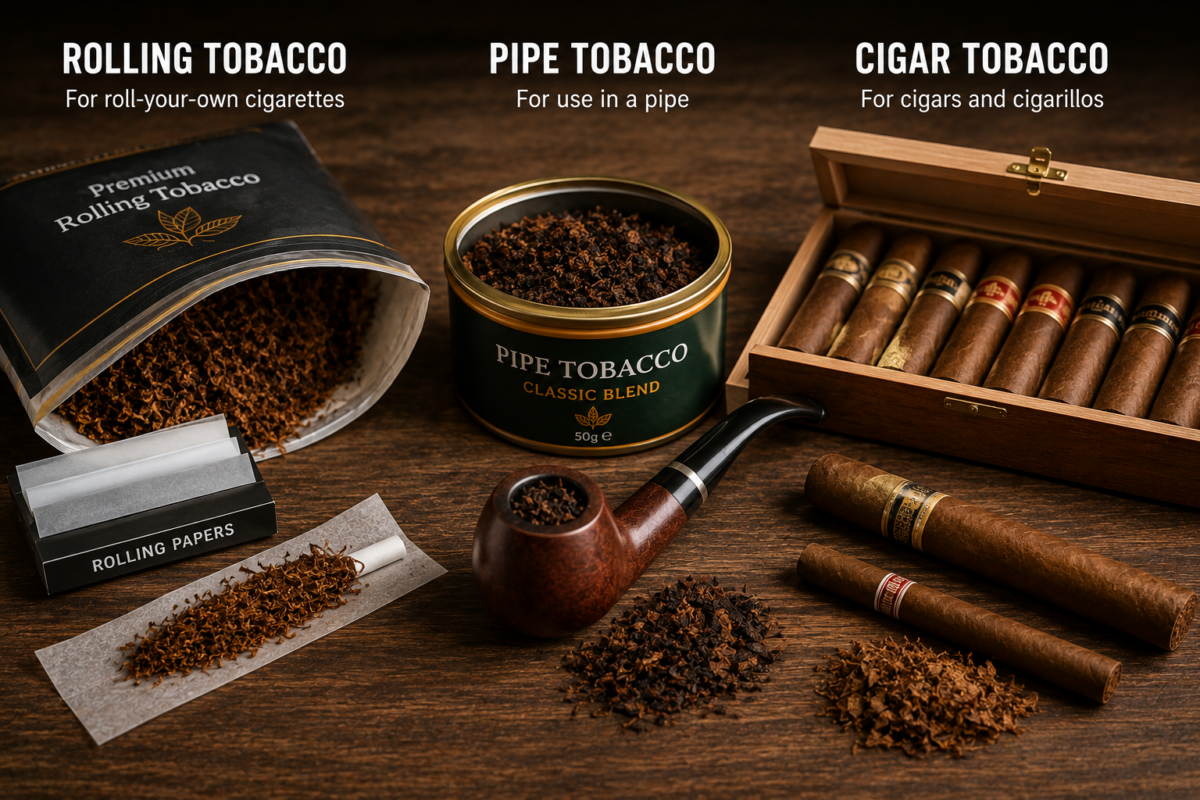
For anyone unfamiliar with tobacco categories, the terminology can be confusing. Rolling tobacco, pipe tobacco and cigar tobacco are all made from tobacco leaf, but they are different product categories with distinct formats, preparation methods, cuts and intended uses.
Understanding the main types of tobacco is useful when comparing products online because a product’s category tells you much more than its name alone. Quantity, cut, format, packaging and intended use can all affect how a product is presented and regulated.
This guide explains the three main categories in simple terms and highlights what adult consumers should look for when comparing tobacco products in Europe.
What Are the Main Types of Tobacco?
The most familiar tobacco categories include:
- Rolling tobacco — loose tobacco generally sold for roll-your-own cigarettes.
- Pipe tobacco — tobacco prepared and cut for use in a pipe.
- Cigar tobacco — tobacco used in cigars and cigarillos, including different leaf types used for fillers, binders and wrappers.
The European regulatory framework recognises several of these categories. The EU Tobacco Products Directive covers cigarettes, roll-your-own tobacco, pipe tobacco, cigars, cigarillos and other tobacco products, with requirements concerning areas such as manufacture, presentation, ingredients and packaging.
While these categories all contain tobacco, they should not be treated as interchangeable products.
Rolling Tobacco: A Closer Look
Rolling tobacco, commonly called roll-your-own or RYO tobacco, is loose tobacco intended for making cigarettes.
What distinguishes rolling tobacco?
The most obvious difference is its format. Rather than being sold as a finished cigarette, the tobacco is packaged loose, commonly in pouches or other containers and identified by weight.
Product descriptions may refer to characteristics such as:
- Tobacco blend
- Cut
- Moisture or consistency
- Pack size
- Product variant
Unlike a manufactured cigarette, loose tobacco does not have a fixed finished-cigarette format. This means that comparing a pouch of rolling tobacco with a packet of cigarettes requires looking at the quantity and product format rather than simply comparing the advertised prices.
For adults researching different tobacco categories, tobacconlineurope.com provides a useful starting point for browsing tobacco products and comparing categories.
Rolling tobacco is also specifically covered by EU tobacco-product rules. For example, EU requirements include health warnings on roll-your-own tobacco packaging.
Pipe Tobacco: What Makes It Different?
Pipe tobacco is another distinct category of loose tobacco, but it is prepared and marketed for a different traditional format.
The tobacco may be presented in different cuts and blends, and product descriptions can vary considerably between manufacturers. Unlike rolling tobacco, pipe tobacco is not primarily categorised around making a conventional roll-your-own cigarette.
What should buyers look for?
When researching pipe tobacco online, useful information includes:
- Product category
- Tobacco blend
- Cut or format
- Pack weight
- Manufacturer information
- Packaging details
- Applicable market requirements
The word “blend” is particularly relevant in tobacco terminology. A blend can combine different tobacco varieties to create a particular product profile. However, marketing descriptions should not be interpreted as health claims or evidence that one tobacco product is safe.
Pipe tobacco is included within the EU regulatory framework alongside other tobacco categories.
Cigar Tobacco: Filler, Binder and Wrapper
Cigar tobacco is different again because cigars are constructed using tobacco leaves in specific roles.
A traditional cigar can contain three basic components:
Filler
The filler forms the central part of the cigar. Different tobacco leaves or combinations may be used depending on the cigar.
Binder
The binder leaf helps hold the filler together and provides the underlying structure of the cigar.
Wrapper
The wrapper is the outer tobacco leaf. It is highly visible and forms the exterior of the finished cigar.
This terminology is useful when reading cigar descriptions because references to wrapper, binder or filler describe different parts of the product rather than simply different “types” of tobacco.
Cigars and cigarillos are recognised as distinct tobacco-product categories under the European framework.
Rolling Tobacco vs Pipe Tobacco vs Cigar Tobacco
A simple comparison makes the differences easier to understand:
| Feature | Rolling Tobacco | Pipe Tobacco | Cigar Tobacco |
|---|---|---|---|
| Typical format | Loose tobacco | Loose tobacco | Leaf/filler construction |
| Intended product | Roll-your-own cigarettes | Pipe | Cigars/cigarillos |
| Common packaging | Pouches/tins | Pouches/tins | Individual cigars, bundles or boxes |
| Important terminology | Cut, blend, weight | Cut, blend, weight | Filler, binder, wrapper |
| Product format | Loose | Loose | Constructed tobacco product |
| Main comparison factors | Blend, cut, weight | Blend, cut, weight | Size, format, construction, tobacco leaves |
The table shows why simply searching for “tobacco” can produce very different products. The category should always be checked before comparing descriptions or prices.
How Tobacco Cuts Affect Product Categories
The term “cut” refers to how tobacco is physically prepared.
Different tobacco products can use different cuts because the tobacco is intended for different formats. Rolling tobacco, for example, is commonly associated with a fine cut suitable for its intended use, while pipe tobacco can be presented in several forms.
Cigar tobacco is different because cigars incorporate whole leaves and other tobacco components rather than relying on one loose cut.
When browsing online, the product description should explain the category and relevant characteristics. If a listing is unclear about what type of tobacco it contains, its quantity or intended category, it is worth seeking clarification before making a purchasing decision.
Comparing Tobacco Products Online
When comparing different types of tobacco, price should not be the only consideration.
A useful checklist is:
- Check the category — Is it rolling, pipe or cigar tobacco?
- Check the quantity — Look at the stated weight or number of products.
- Read the product description — Identify the blend, format and relevant characteristics.
- Check the packaging — Look for clear product identification and required information.
- Compare like with like — A pouch of loose tobacco and a box of cigars are fundamentally different products.
- Check applicable regulations — Tobacco-sale requirements can differ between European markets.
This approach is particularly important when shopping online, where product photographs may not show every relevant detail.
Packaging and European Regulations
Tobacco packaging is more than a branding element. European tobacco regulations establish requirements concerning health warnings, product presentation and other information.
The European Commission explains that the Tobacco Products Directive applies to several categories, including cigarettes, roll-your-own tobacco, pipe tobacco, cigars and cigarillos. It also establishes rules concerning ingredients, packaging and health warnings.
National requirements can also differ, so consumers should check the rules applicable to their own country when purchasing tobacco products, particularly when considering cross-border transactions.
Are Some Types of Tobacco Safer Than Others?
Different product formats should not be confused with different levels of safety.
The World Health Organization states that all forms of tobacco use are harmful and that there is no safe level of exposure to tobacco. Its current tobacco information specifically includes products such as cigars, cigarillos, roll-your-own tobacco and pipe tobacco.
Terms such as “natural”, “premium”, “light” or “additive-free” should therefore not be interpreted as meaning that a tobacco product is harmless or risk-free.
The purpose of understanding tobacco categories is to identify and compare products accurately—not to imply that one category is a safe alternative to another.
Which Type of Tobacco Should You Choose?
There is no single category that suits every consumer because rolling tobacco, pipe tobacco and cigars are different product formats.
Someone researching rolling tobacco will generally be looking at loose tobacco products, while someone interested in cigars will need to consider cigar format and construction. Pipe tobacco has its own terminology, cuts and product descriptions.
The most useful approach is to first identify the category you are interested in, then compare products within that category based on clearly stated characteristics.
For adults researching the available categories, tobacconlineurope.com can be used to explore tobacco products and understand how different categories are presented.
Final Thoughts
Understanding the main types of tobacco makes online product research much easier. Rolling tobacco, pipe tobacco and cigar tobacco may share the same broad raw material, but their formats, cuts, construction and intended uses are different.
Before comparing products, identify the category, check the stated quantity, read the product description and review the applicable regulations for your market. This creates a more accurate basis for comparing tobacco products online.
Tobacco use carries significant health risks. This article is intended to explain product categories and terminology for adults and does not suggest that any tobacco product is safe or risk-free.
FAQs
What are the main types of tobacco?
Common tobacco categories include rolling tobacco, pipe tobacco, cigars and cigarillos. Each category has different formats and characteristics.
What is rolling tobacco?
Rolling tobacco is loose tobacco generally sold by weight and intended for roll-your-own cigarettes. It is different from manufactured cigarettes, which are sold as finished products.
What is pipe tobacco?
Pipe tobacco is a tobacco product prepared and marketed for use in a pipe. It can be available in different blends and cuts.
What is cigar tobacco?
Cigar tobacco is used in the construction of cigars and cigarillos. Traditional cigars can contain filler, binder and wrapper tobacco leaves.
Are rolling tobacco, pipe tobacco and cigar tobacco the same?
No. They are different product categories with different formats, cuts, construction and intended uses, even though they are all tobacco products.
Where can I research different types of tobacco?
Adults can explore tobacco categories and product information through specialist retailers such as tobacconlineurope.com. Regulations concerning tobacco sales can vary by country, so local official guidance should also be checked.
