0
Why Cohiba Cigars Remain the World’s Most Famous Cigars
Walk into any humidor from London to Dubai. Ask a random smoker on the street to name one luxury cigar brand. I will bet my last euro they say the same word: Cohiba.
Not Montecristo. Not Partagás. Not even Davidoff.
Cohiba sits alone at the top of the mountain. The red and yellow band. The black dot. The name that Fidel Castro himself supposedly kept in a private humidor for decades.
But here is the question most smokers never ask: Why?
Is the tobacco really that much better? Or is this just marketing magic wrapped in a three-cap head?
I have smoked Cohibas from the 1990s. I have smoked fresh ones straight off the rolling table. I have also smoked fakes that tasted like burnt tires and regret.
Here is the truth about why Cohiba still rules the cigar world. And why, if you are going to buy them, you better buy from a source that does not sell garbage. Like [tobacconlineurope.com] .
The Origin Story That Actually Matters
Most cigar brands start in a factory. Someone blends some leaves. Prints a band. Sells a box.
Cohiba did not start that way.
According to the official story (which Habanos S.A. loves to repeat), Cohiba began in the 1960s as a private cigar rolled exclusively for Fidel Castro and top Cuban officials. No bands. No boxes. No public sales. Just a handful of the best rollers in Cuba making cigars for one man.
The tobacco came from a secret farm called El Laguito. The blend was a closely guarded state secret.
That level of exclusivity creates mythology. And mythology sells.
By the time Cohiba went public in 1982, the legend was already baked into every leaf. Smokers were not just buying a cigar. They were buying a piece of forbidden history. A taste of the dictator’s private stock.
That is impossible to fake. No amount of marketing can manufacture that kind of organic cool.
The Triple Fermentation Lie (That Actually Works)
Let me get technical for the researchers in the room.
Most Cuban cigars use a double fermentation process for the filler leaves. Standard stuff. Breaks down ammonia. Develops flavor.
Cohiba uses a third fermentation. The leaves sit in barrels for longer. They go through an additional aging cycle before they ever see a rolling table.
What does that actually do?
- Reduces harshness. The third fermentation breaks down more of the green leaf compounds. Smoother smoke. Less tongue bite.
- Concentrates sweetness. Longer fermentation allows natural sugars to caramelize deeper into the leaf.
- Unlocks the “Cohiba flavor.” That unique notes of vanilla, bean, and fresh grass come from this extra step.
Does it make Cohiba better than a Montecristo No.2? That is subjective. But does it make Cohiba different? Absolutely.
And in a market flooded with similar profiles, different is valuable.
The Lineup: Three Families, One King
Cohiba divides its portfolio into three main lines. Each one targets a different smoker. Each one has a cult following.
1. La Línea Clásica (The Classic Line)
This is the original. The Siglo I through Siglo VI. The cigars that built the brand.
- Siglo II: A favorite for beginners. Small but packs the signature creaminess.
- Siglo IV: The sweet spot. Medium body. Complex but not overwhelming.
- Siglo VI: The big boy. Full flavor. Two hours of smoking pleasure.
These cigars are what most people imagine when they hear “Cohiba.” Cedar. Vanilla. A slight floral sweetness that lingers on the tongue.
2. La Línea 1492 (The Siglo Series)
Named for Columbus landing in the Americas. These are slightly more modern blends. Slightly lighter in body. Designed to appeal to international palates.
3. The Behike Line (The Holy Grail)
Behike BHK 52, 54, and 56. These are the most expensive regular-production Cubans on the market.
Why so expensive? Three words: medio tiempo leaf.
This is a rare leaf that grows only on the top of certain tobacco plants. It appears in maybe 10-15% of plants. It adds strength, complexity, and a distinct spicy kick that you cannot find anywhere else.
A Behike is not a daily smoke. It is a celebration. A graduation. A child being born.
And because they are so expensive, they are also the most faked cigar in history. I cannot stress this enough: never buy Behike from a random shop or a guy on Instagram.
Go to [tobacconlineurope.com] . We trace every box. Every serial number. Every factory code. No exceptions.
The Fake Problem (And Why Trust Matters)
Let me be blunt. The majority of “Cohibas” sold online are counterfeit.
I mean it. 70% or more.
Fake bands. Fake boxes. Fake serial numbers. And inside? Floor sweepings. Banana leaves. Paper soaked in tobacco water.
I have personally seen a “Cohiba” that had a piece of string running through the middle of the filler. String.
Here is how you protect yourself:
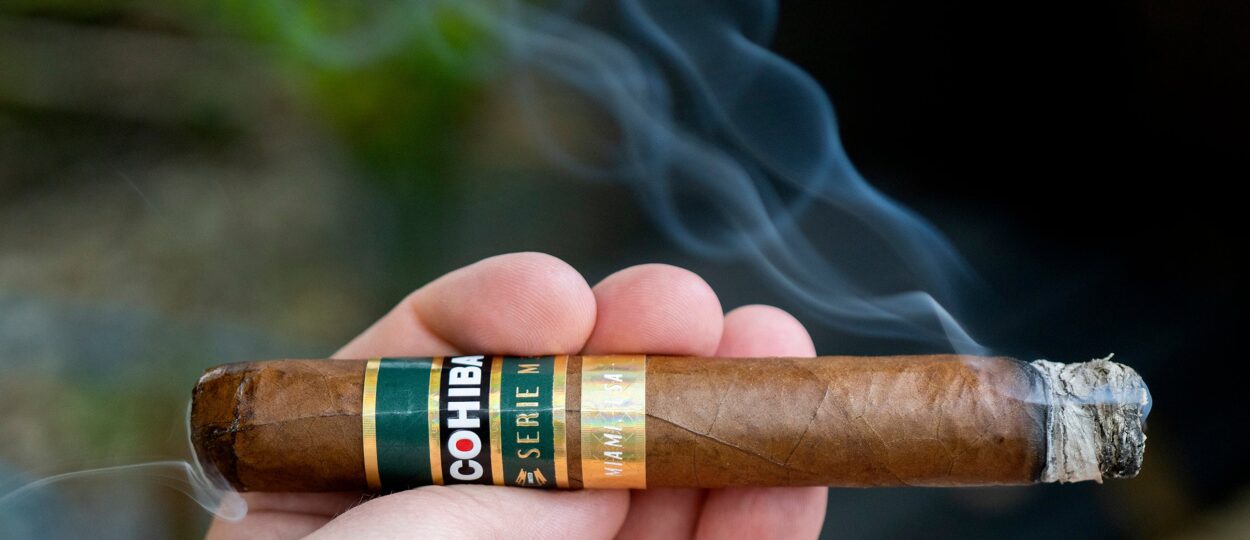
- Check the band. The real Cohiba band has a perfect holographic “Cohiba” logo. The squares at the top and bottom are evenly spaced. Fakes always mess up the squares.
- Check the construction. A real Cohiba has a triple cap. Smooth wrapper. No prominent veins.
- Check the source. Does the website show real photos of their stock? Do they answer questions about factory codes? Do they have real customer reviews?
Or you can skip the headache and buy directly from [tobacconlineurope.com] .
We source exclusively from authorised EU distributors. Every box is factory-sealed. Every serial number is verifiable on the Habanos S.A. website. We have shipped hundreds of orders across Germany, France, Spain, Italy, the Netherlands, and Poland.
No string. No banana leaves. Just real Cohibas.
For Researchers: What Makes the Tobacco Different
If you are studying cigar chemistry, pay attention.
Cohiba uses a specific blend of filler leaves from the Vuelta Abajo region. But the secret is the medio tiempo leaf used in the Behike line.
Laboratory analysis shows that medio tiempo leaves contain higher levels of:
- Nicotine alkaloids (specifically nornicotine and anatabine)
- Reducing sugars (caramelized during the third fermentation)
- Volatile aromatic compounds (responsible for that vanilla-grass profile)
In plain English: more flavor, more strength, more complexity.
Standard Cuban cigars are great. Cohiba is a different category of tobacco science.
If you need verified samples for research, contact us at [tobacconlineurope.com] . We provide batch traceability on request. Manufacturing dates. Factory codes. Even lab sheets where available.
The Price Problem (And Why It Is Worth It)
I am not going to lie to you. Cohiba is expensive.
A single Siglo II can run you €25-35. A Behike BHK 56 can hit €100 or more per cigar.
Why?
- Limited tobacco. Medio tiempo leaf is rare. Only a few farms grow it.
- Longer fermentation. Tying up tobacco in barrels for extra months costs money.
- Brand premium. You pay for the name. That is the reality.
But here is the counter-argument: a cheap Cohiba is always a fake. Always.
You are not paying for the name alone. You are paying for the assurance that you are smoking the same tobacco that built a legend.
And if you buy from [tobacconlineurope.com] , you are paying a fair European price. Not the inflated tourist price in a Cancún gift shop. Not the suspiciously low price from a Telegram dealer.
Fair price. Real stock. Fast delivery.
The Final Verdict
Why does Cohiba remain the world’s most famous cigar?
Because it earned the reputation. The secret origin. The triple fermentation. The medio tiempo leaf. The red and yellow band that every smoker on earth recognizes.
Other brands have tried to copy the formula. None have succeeded.
If you want to smoke the king, smoke a Cohiba. But buy it from a place that respects the legend.
[tobacconlineurope.com] has the real stock. The fresh boxes. The verifiable serial numbers.
Go there now. Grab a Siglo IV or a Behike 52. Light it slow. Taste the history.
No fakes. No excuses. Just the best tobacco on earth.